Understanding Bad Breath: Causes, Remedies, and Signs You Should Not Ignore

Updated: Apr 17
Bad breath affects millions of people worldwide. It can quietly affect your confidence, personal relationships, and daily interactions. Don’t let bad breath speak louder than your words. While occasional bad breath is common, persistent bad breath is often a warning sign that should not be ignored.
Many people rely on mouth fresheners or mouthwash to manage the problem, but these only mask the odor temporarily. Understanding the true causes of bad breath is the key to long-lasting relief and better oral health.

What Is Bad Breath (Halitosis)?
Bad breath, medically known as halitosis, refers to an unpleasant odor coming from the mouth. It may be temporary due to food habits or dehydration, but when it persists despite regular brushing, it often indicates an underlying dental or medical issue.
What Causes Bad Breath?
Bad breath usually originates from the mouth, but it can also come from other parts of the body. The most common causes include:
Poor Oral Hygiene
When food particles remain in your mouth, they promote bacterial growth. These bacteria produce sulfur compounds that cause unpleasant odors. Skipping brushing and flossing allows plaque buildup, which worsens bad breath.
Dental Issues
Certain dental problems contribute to halitosis, such as:
Gum disease (gingivitis and periodontitis): Infected gums harbor bacteria that produce foul smells.
Tooth decay: Cavities trap food and bacteria.
Dry mouth (xerostomia): Saliva helps cleanse the mouth. Reduced saliva flow leads to bacterial overgrowth.
Tonsil stones: These are calcified debris in the tonsils that emit a strong odor.
Tongue coating: The tongue can harbor bacteria, food debris, and dead cells. If not cleaned regularly, it becomes a hidden but significant source of bad breath.
Food and Lifestyle Choices
Certain foods like garlic, onions, and spices can cause temporary bad breath. Smoking and excessive alcohol use also dry out the mouth and increase odor-causing bacteria.
Medical (Non-Dental) Causes of Bad Breath
Although dental issues are the most common cause, bad breath can sometimes be associated with systemic conditions such as:
Diabetes (fruity or acetone-like odor)
Kidney disease (ammonia-like smell)
Liver disorders
Acid reflux (GERD)
Sinus and throat infections
👉 Even when medical conditions are suspected, a dental examination is usually the first step to rule out oral causes.
Home Remedies to Manage Bad Breath
Many cases of bad breath improve with simple home care. Here are effective remedies you can try:
Maintain Good Oral Hygiene
Brush your teeth at least twice a day using fluoride toothpaste.
Floss daily to remove food particles between teeth.
Clean your tongue gently with a tongue scraper or toothbrush to remove bacteria.
Replace your toothbrush every 3 months or after illness.
Stay Hydrated
Drinking water throughout the day helps keep your mouth moist and washes away food debris.
Use Mouthwash Wisely
Antibacterial mouthwashes can reduce bacteria but avoid those with high alcohol content, which may dry out your mouth.
Adjust Your Diet
Limit foods that cause strong odors. Eating crunchy fruits and vegetables like apples and carrots can help clean your teeth naturally.
Quit Smoking
Stopping tobacco use improves breath and overall oral health.
Chew Sugar-Free Gum
Chewing gum stimulates saliva production, which helps neutralize acids and wash away bacteria.
⚠️ These remedies may control symptoms but cannot treat the root cause of persistent bad breath.
Warning Signs You Should Not Ignore
Consult a dentist if:
Bad breath persists despite good oral hygiene
You notice bleeding or swollen gums
There is a constant bad taste in the mouth
You experience mouth dryness, pain, or loose teeth
Early diagnosis helps prevent gum disease, tooth loss, and long-term oral health complications.
If you notice any of these symptoms, schedule a dental checkup or consult your healthcare provider. Early diagnosis can prevent complications and address underlying conditions.
How Can a Dentist Help?
A dentist can:
Identify the exact cause of bad breath
Perform professional dental cleaning
Treat gum disease or tooth infections
Guide you on correct brushing and tongue-cleaning techniques
Refer you for medical evaluation if a non-dental cause is suspected
Treating the underlying cause is the only effective way to achieve long-term relief.
Why Choose Dentalk® for Bad Breath Treatment in Pimple Saudagar?
If you are looking for a Periodontist near me to address persistent bad breath, it is important to choose a clinic that treats the root cause, not just the symptom. Here is how we provide specialized care at DENTALK® Speciality Dental Clinic:
1. A Clinical Approach, Not Just a Cosmetic Fix
At DENTALK®, we treat bad breath (halitosis) as a clinical symptom rather than a simple cosmetic concern. Chronic mouth odor is often a warning sign of underlying gum disease or bacterial buildup. Every patient undergoes a thorough evaluation of their teeth, gums, and oral tissues to identify the biological source of the issue.
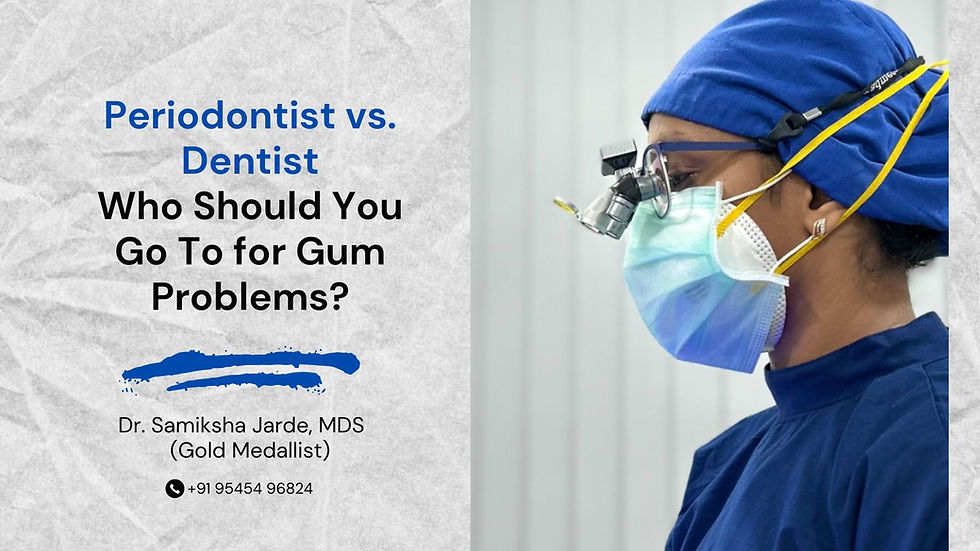
2. Specialist Expertise by Dr. Samiksha Jarde, MDS
Your care is led by Dr. Samiksha Jarde, MDS (Gold Medalist), a specialist Periodontist and Oral Implantologist. With a focus on ethical, evidence-based dental care, Dr. Jarde emphasizes:
Gum Health: Addressing deep-seated bacteria in gum pockets.
Early Diagnosis: Identifying issues before they lead to bone loss or tooth decay.
Long-Term Oral Health: Our goal is to restore your fresh breath while protecting your natural teeth for a lifetime.
3. Honest and Transparent Guidance
We believe in a "No-Rush" dentistry philosophy, ensuring you receive a dedicated diagnosis. We guide our patients with complete honesty—whether your solution involves:
Specialized Dental Treatment (such as Deep Scaling or Laser Gum Therapy).
Personalized Oral Hygiene Protocols tailored to your needs.
Medical Referrals if the cause is related to a systemic health issue.
4. Advanced Technology in Pimple Saudagar
Located at Vision 9 Mall, our clinic uses magnification-assisted techniques and advanced technology to ensure precise and predictable outcomes. We provide a responsible, comprehensive treatment plan that ensures your confidence and health are fully restored.
Frequently Asked questions
Why does my bad breath persist even though I brush my teeth twice a day?
Brushing only cleans about 60% of your tooth surfaces. Odor-causing bacteria often hide in deep gum pockets or the tiny grooves of the tongue. At DENTALK® Speciality Dental Clinic, Dr. Samiksha Jarde uses magnification-assisted tools to identify these hidden bacterial reservoirs that standard home cleaning cannot reach.
Is there a connection between gum health and chronic halitosis?
Yes, a significant one. Persistent bad breath is a primary clinical sign of periodontal (gum) disease. As a specialist Periodontist in Pimple Saudagar, Dr. Samiksha Jarde treats the root cause by removing "biofilm" and tartar from beneath the gum line, which neutralizes the odor at its source rather than just masking it.
Can a professional dental cleaning really fix "bad breath" long-term?
A professional cleaning, or scaling, is the most effective way to remove calcified plaque (tartar) that harbors sulfur-producing bacteria. Dr. Samiksha Jarde, MDS (Gold Medalist), provides evidence-based hygiene protocols at DENTALK® that not only refresh your breath but also strengthen the attachment of your gums to your teeth, preventing future odor.
Final Thoughts: Fresh Breath is a Sign of Oral Health
Bad breath should never be ignored or simply masked. While various medical conditions can contribute to halitosis, the vast majority of cases are dental in origin and highly treatable with timely, specialized care.
Fresh breath is more than just a convenience—it reflects healthy teeth, healthy gums, and your overall well-being. Don’t let bad breath speak louder than your words. When you address the root cause, you regain both your oral health and your social confidence.
Restore Your Confidence Today
Take the first step toward lasting freshness with a professional dental evaluation.
👉 Book Your Appointment with Dr. Samiksha Jarde, MDS (Gold Medalist)
📞 Call or WhatsApp: +91 95454 96824
Visit us at Vision 9 Mall, Pimple Saudagar, Pune.
Still Not Sure? Read More
Gum Health: Why Do My Gums Bleed When I Brush?
Bleeding is a warning sign, not a normal part of brushing. Learn why your gums bleed and how a specialist evaluation can stop the progression of gum disease.
Early Care: Why Early Diagnosis Matters for Saving Natural Teeth
Our "No-Rush" philosophy focuses on saving your natural teeth. Discover how early clinical intervention prevents bone loss and avoids the need for complex extractions.
Hygiene Tools: Water Flosser vs. Traditional Floss: Which is Right for You?
Confused about which tool to use? We compare the effectiveness of water flossers and traditional floss for maintaining healthy gums and dental implants.